Cattle Record Book: Streamline Your Livestock Management with a Professional Tool
For farmers, ranchers, and livestock managers, maintaining accurate and organized records is essential for the success of any cattle operation. A Cattle Record Book offers a structured way to track important details about your herd, from breeding cycles to medical histories. This tool is more than just a notebook—it’s a comprehensive system that supports informed decision-making and long-term planning.
Designed with practicality in mind, the Cattle Record Book is an all-in-one solution that helps you manage your livestock efficiently. Whether you're running a small family farm or a large-scale operation, this book provides the flexibility and clarity needed to keep your records up to date and accessible.
What Is a Cattle Record Book and How Does It Fit Into Your Workflow?
A Cattle Record Book is a specialized journal used to document key information about each animal in your herd. It serves as a central repository for data such as birth dates, vaccination schedules, breeding history, calving events, and health records. This type of record-keeping is crucial for monitoring the well-being of your animals, ensuring compliance with industry standards, and optimizing breeding strategies.
The Cattle Record Book fits naturally into various stages of your workflow. Before acquiring new livestock, it can help you evaluate potential purchases by comparing historical data. During daily operations, it allows you to log updates and observations in real time. After a task or project—such as a breeding season or a health check—it provides a reference point for future planning and analysis.
This tool is especially useful when integrated with other management systems, such as digital inventory software or farm management apps. By using the Cattle Record Book alongside these platforms, you can maintain a consistent flow of information and reduce the risk of errors or omissions.
Key Features That Make This Cattle Record Book Stand Out
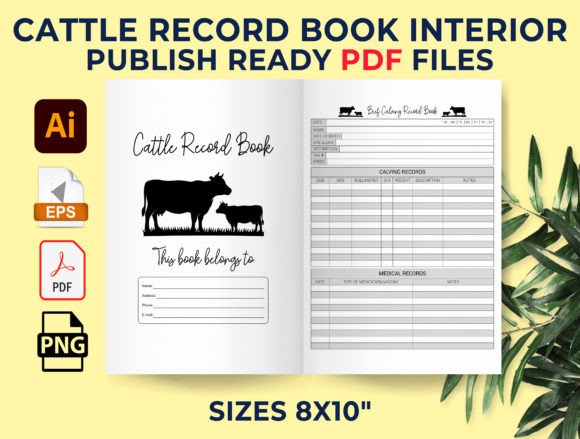
The Cattle Record Book is designed with both functionality and aesthetics in mind. Its dimensions—8 inches by 10 inches—make it easy to carry and store, while the 120-page layout provides ample space for detailed entries. The pages are designed to be flexible, allowing you to add or remove content as needed, which makes it ideal for evolving operations.
One of the standout features is the absence of bleed, ensuring that printed pages look clean and professional. The book also includes an intro page, making it easy to set up and customize according to your specific needs. For those who prefer digital formats, the Cattle Record Book comes with high-quality print-ready PDF files at 300 DPI, ensuring crisp and clear output when printed.
Additionally, the design is unique and user-friendly, with dedicated sections for notes and tracking. This makes it simple to jot down observations, reminders, or additional details without cluttering the main record pages. The availability of multiple file formats—including PDF, AI, EPS, and PNG—ensures compatibility with various design and printing tools.
How to Use the Cattle Record Book in Different Scenarios
Whether you’re managing a small herd or a large operation, the Cattle Record Book can be adapted to suit your needs. Here are a few practical examples of how it can be used:
- Pre-Purchase Evaluation: Before buying new cattle, use the record book to compare traits, health histories, and breeding potential. This helps you make informed decisions and avoid costly mistakes.
- Daily Operations: Log daily activities such as feeding schedules, health checks, and environmental conditions. This ensures consistency and provides a clear picture of your herd’s routine.
- Breeding and Calving: Track mating dates, pregnancy progress, and calving events. This data is invaluable for predicting future births and managing breeding cycles effectively.
- Medical Records: Maintain a detailed log of vaccinations, treatments, and veterinary visits. This helps identify patterns and ensure timely care for your animals.
- Long-Term Planning: Use the recorded data to analyze trends, improve breeding strategies, and optimize herd performance over time.
By incorporating the Cattle Record Book into your daily routine, you can streamline your workflow and reduce the time spent on manual data entry. Its structured format encourages consistency, making it easier to maintain accurate records over the long term.
Integration With Other Tools and Resources
The Cattle Record Book works well with other tools and resources commonly used in livestock management. For instance, it can complement digital farm management systems by providing a physical backup of critical data. This dual approach ensures that your records are always accessible, even if digital systems experience downtime.
It also pairs well with other documentation methods, such as spreadsheets or mobile apps. You can use the book for quick notes and then transfer the information to a digital platform for further analysis. This hybrid approach maximizes efficiency and reduces the risk of data loss.
Additionally, the Cattle Record Book can be used in conjunction with training materials, such as guides on animal husbandry or breeding practices. By cross-referencing these resources with your own records, you can enhance your knowledge and improve your decision-making process.
Practical Tips for Effective Use
To get the most out of your Cattle Record Book, consider the following tips:
- Establish a Routine: Set aside time each day or week to update the book. Consistency is key to maintaining accurate and up-to-date records.
- Customize as Needed: Modify the layout or add extra pages to match your specific requirements. This ensures that the book remains relevant and useful over time.
- Use Clear Formatting: Keep entries concise and organized. Use headings, bullet points, or color-coding to make information easy to find and understand.
- Review Regularly: Periodically review past entries to identify patterns or areas for improvement. This helps you refine your management strategies and make data-driven decisions.
- Share with Team Members: If you have a team, ensure that everyone is familiar with the record-keeping process. This promotes collaboration and reduces the risk of miscommunication.
By following these best practices, you can maximize the value of your Cattle Record Book and turn it into an essential part of your livestock management strategy.
Why Choose This Cattle Record Book?
The Cattle Record Book is not just a tool—it’s a valuable asset that supports efficient and effective livestock management. Its combination of practical design, flexibility, and high-quality materials makes it suitable for both personal and professional use.
Whether you're a seasoned farmer or a beginner looking to improve your record-keeping, this book offers the structure and clarity needed to stay organized. Its KDP-tested quality ensures that it meets industry standards and performs reliably in real-world scenarios.
By integrating the Cattle Record Book into your workflow, you can simplify complex tasks, improve decision-making, and achieve better results from your cattle operation. With its versatile features and user-friendly design, it’s a must-have for anyone serious about managing livestock effectively.